Perched at 8,650 feet beneath the rugged peaks of Yule and White House Mountains, Beaver Lake is more than just a picturesque alpine reservoir—it’s a historic treasure shaped by the rich marble-mining heritage of the town of Marble.
Formed by damming the Crystal River in the early 1900s, Beaver Lake played a key role in supporting Marble’s thriving quarry operations. Founded in 1899, the town became renowned for Yule Marble, famously used in national monuments like the Lincoln Memorial. Back then, the lake was a vital resource for water and a gathering place for quarry workers. Its shores once hosted rustic log cabins for the crews—many of which have been thoughtfully restored into the charming Beaver Lake Lodge & Cabins that welcome visitors today.

A beautiful hidden gem tucked away in the mountains—perfect for unwinding. Pack a lunch, pull up a chair, and soak in the fresh alpine air as you relax by the tranquil lakeshore.

Public Access
Beaver Lake offers accessible shoreline fishing, with a dike on the western end providing excellent casting opportunities. Only non-motorized options such as canoes, float tubes, and stand-up paddleboards are allowed—and as of 2024, access has been limited to licensed anglers aged 16 and older. During the summer months, the lake is regularly stocked with a variety of trout species, including rainbow, brook, Apache, and cutthroat, making it a rewarding destination for anglers of all skill levels.
Fishing Tips
Nymphing is often the most productive technique at Beaver Lake, especially early and late in the season. Try beadhead Hare’s Ears, RS2s, and midges suspended under an indicator for consistent subsurface action. As hatches begin to shift toward the surface around midday, switch to a dry fly strategy using small Elk Hair Caddis or Parachute Adams. Be sure to match your fly size to the insects you see on the water. For deeper water or overcast days, streamers like a black Ghost or classic Woolly Bugger can provoke aggressive strikes from lurking trout.
During damselfly emergence along the shoreline, pair a damselfly nymph with a split-shot and follow up with emergers—a deadly combo, especially under light winds around 10 o’clock. Tippet selection is crucial: use 5X to 6X for midges and BWOs, and step up to 4X for stoneflies or terrestrial patterns. A 4–6 weight rod with floating or lightly weighted lines offers the versatility needed for both dries and streamers.

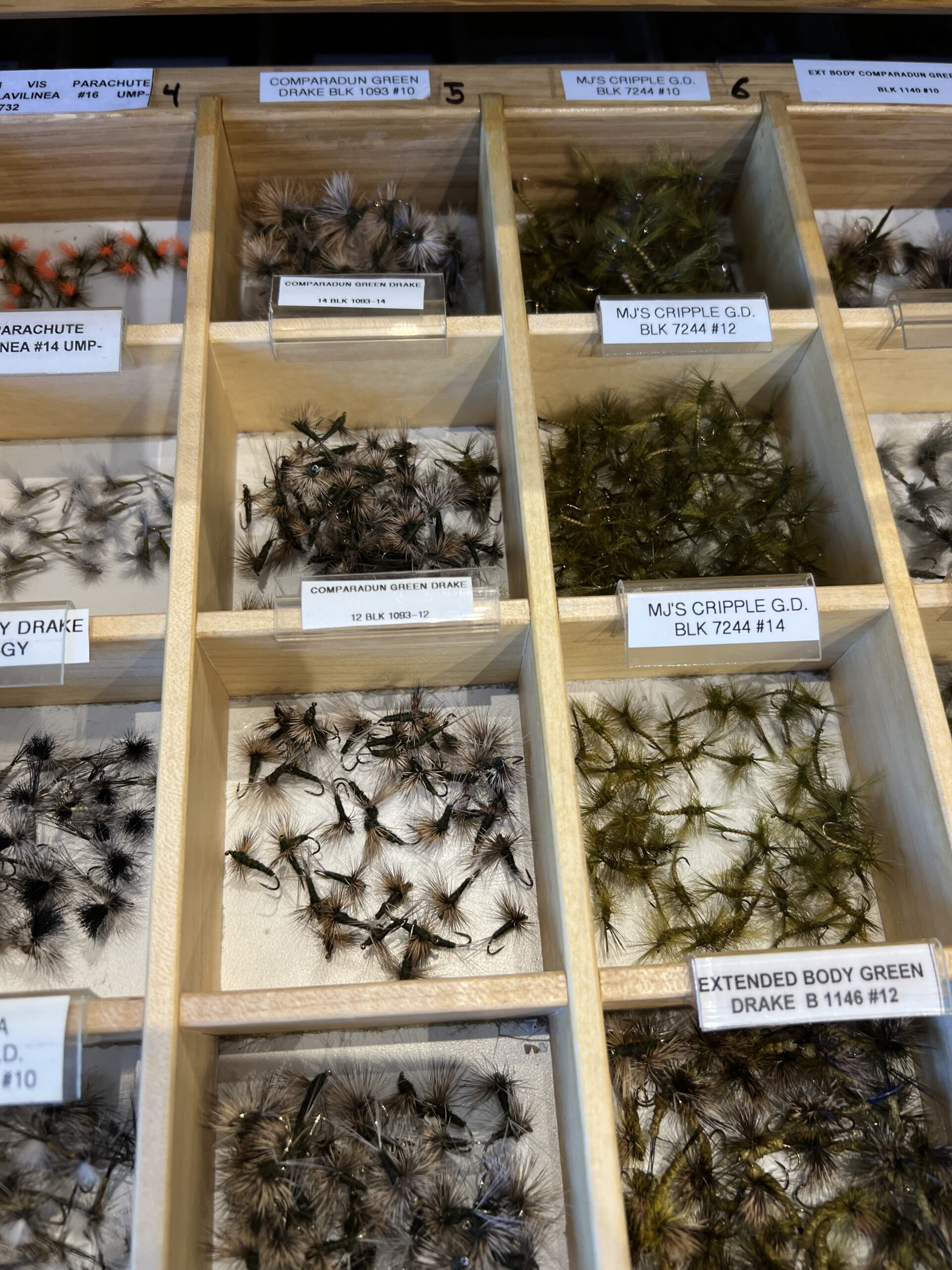
Fat Rainbows reside in this crystal clear lake. Check the hatch chart below.

The Magic of the Hatch
| Insect | Active Season | Fly Patterns |
|---|---|---|
| Midges | Full season | Zebra Midge (20–24), RS2 (20–22) |
| BWOs | Mar–Apr, Sept–Oct | Parachute Adams (18–22) |
| Caddis | Jun–Sept | Elk Hair Caddis (14–18) |
| Stoneflies | Apr–Aug | Yellow Sally (#14), Micro Stone (#16) |
| Damselflies | Apr–Aug | Wiggle Nymph, Damsel patterns |